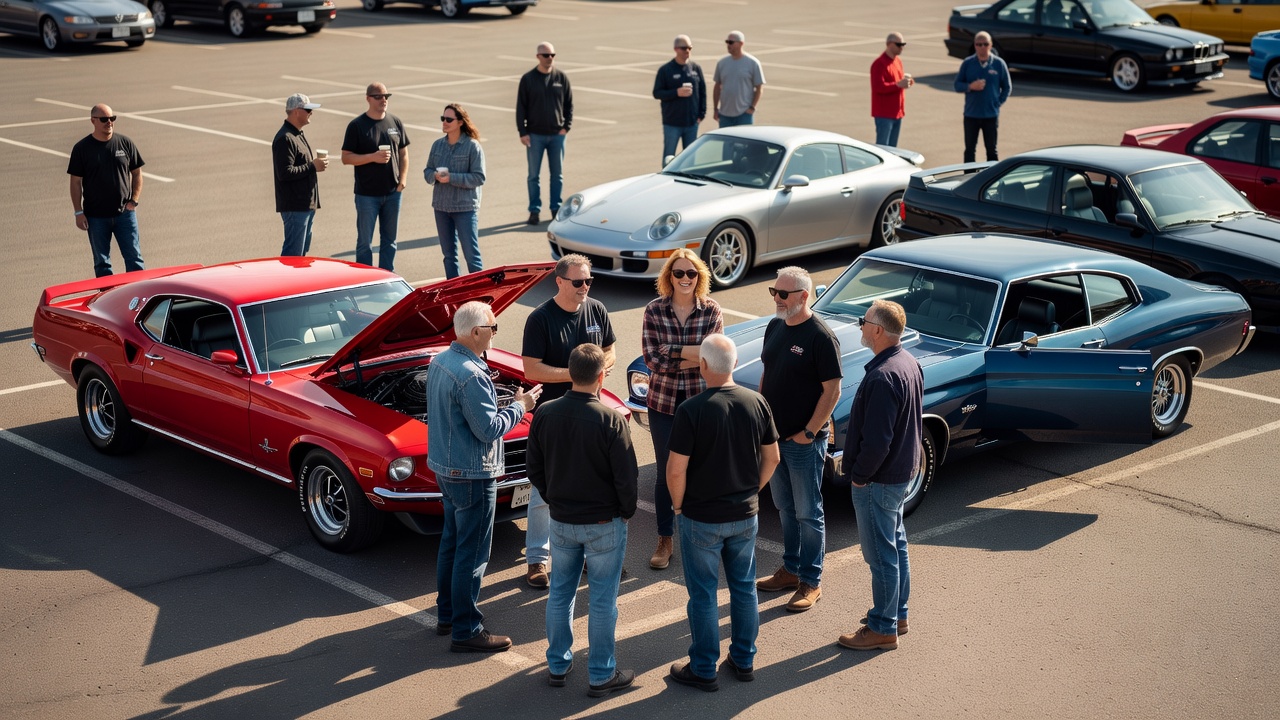
A useful automotive community is more than a list of vehicles or a busy feed. Look for clear expectations, respectful conversation and a shared reason to meet. This guide covers categories and evaluation criteria; it does not endorse or represent any club.
Community formats serve different needs
Local clubs often organize in-person gatherings, drives or knowledge-sharing sessions. Brand communities connect owners around a marque or model family. Independent groups may bring together enthusiasts by vehicle style, modification interest, region or activity. Online communities can make it easier to ask questions across distances, while local networks help turn advice into face-to-face conversation.
Each format has trade-offs. A specialist group can offer focused knowledge but may have a narrow subject. A broad community offers varied perspectives but may be less useful for technical detail. A social channel is convenient, yet its moderation and information quality can vary. Choose based on what you want to learn or do, not on member counts or claims of status.
Evaluate before joining
Read public posts and group rules before requesting access. Look for the way members handle disagreement, safety questions, newcomers and vehicle differences. Check whether moderators respond to harassment or unsafe conduct. Notice whether recommendations include context and trade-offs or simply push a single option.
- Purpose: Is the group’s subject clear and relevant to you?
- Conduct: Are questions answered without personal attacks or pressure?
- Organization: Are event details and participation expectations easy to understand?
- Privacy: Are photography, location sharing and personal information handled carefully?
- Balance: Do members discuss limitations as well as benefits?
Do not treat an active feed as proof of expertise. For safety-critical work, verify advice with qualified professionals and reliable technical documentation. A community can help you identify questions and compare experiences; it cannot replace an inspection or a professional assessment.
Newcomer participation
Start by introducing your interest and asking one specific question. Read pinned information and recent posts first. Attend a public event as a visitor before volunteering for a role or joining a long trip. If a group has entry steps, follow them. Do not assume a new community uses the same etiquette as another one.
Keep your first contribution useful. Share the vehicle context, intended use and constraints relevant to a question. Avoid posting private registration details, home addresses or someone else’s contact information. When meeting in person, use public event arrangements and make your own travel and safety decisions.
Knowledge sharing that helps
Communities can be useful for comparing maintenance routines, learning terminology, finding general workshop or parts-service categories and hearing how owners manage a type of project. Ask what a recommendation is based on, what alternatives were considered and what follow-up maintenance was needed. Experiences are individual; they are not universal test results.
For workshop recommendations, compare the service scope, relevant experience, written estimates, communication and applicable qualifications. For parts, compare compatibility information, support, documentation and return terms. These are selection categories, not endorsements of specific suppliers. Avoid sharing unverified claims about a business or person.
Events, drives and photography
Community events may include static meets, informal coffee gatherings, organized drives or technical talks. Before attending, confirm the meeting point, participant expectations, vehicle requirements and whether guests are welcome. For group drives, understand the route and communication plan. Keep safe following distance, obey road rules and do not pressure other drivers to keep pace.
Ask before photographing members or their vehicles at close range. Follow requests not to post images or identifiable details. If you share event photos, respect the group’s rules and the privacy of people in the frame. A community gathering should remain comfortable for people who prefer not to be photographed.
Group etiquette and healthy boundaries
Respect different budgets, vehicle conditions and levels of experience. Do not ridicule a beginner question or treat one build style as the only valid choice. Separate opinion from fact. Correct errors with a source where possible, and acknowledge uncertainty. Keep event spaces tidy and follow host instructions.
Healthy communities let members decline invitations, avoid public-road risk and set limits on what they share. Be cautious with requests for personal documents, money or detailed home-location information. Use the platform’s reporting tools if conduct becomes threatening or abusive.
Good for
Communities suit people seeking local connections, shared vehicle interests, peer learning, event companions or a wider range of practical perspectives.
What to know
- Group culture and moderation differ; review public activity and rules.
- Online advice is not a substitute for qualified technical assessment.
- Protect personal information and respect image-sharing preferences.
- Join at your own pace. A useful group does not require unsafe commitments.
Make the connection practical
Choose a community whose purpose matches your needs. Contribute clearly, verify consequential advice and keep interactions respectful. If the group’s conduct or expectations do not fit, leave without obligation and look for a better match.